For the month of May my focus was on literature, history/classics, and Italian. We’ll get to the history and Italian topics later on (don’t worry).
Now that’s a very broad term, ‘literature’, what do I mean by it? Simply put, I wanted to read more books (a little present to me that I wouldn’t lose too much time on my beloved hobby). I also wanted to touch on some grammar if I had time left after my readings because unfortunately, I feel like I don’t have a fantastic handle on my first languages grammar. I don’t mean in terms of commas and apostrophes, but any harder and more complicated aspects of the English language. Especially if I want a career being an editor, author, or copywriter then I want to make sure I have a good knowledge base on grammar and language.
On my reading list for this month:
Hamlet
Middlemarch
Beowulf
I created my reading list from both a quick google search and the contents of my bookshelf, trying to give myself a broad base to launch off of. I did have Wuthering Heights as a back-up for a 4th book to read but unfortunately, I didn’t get to it this month.
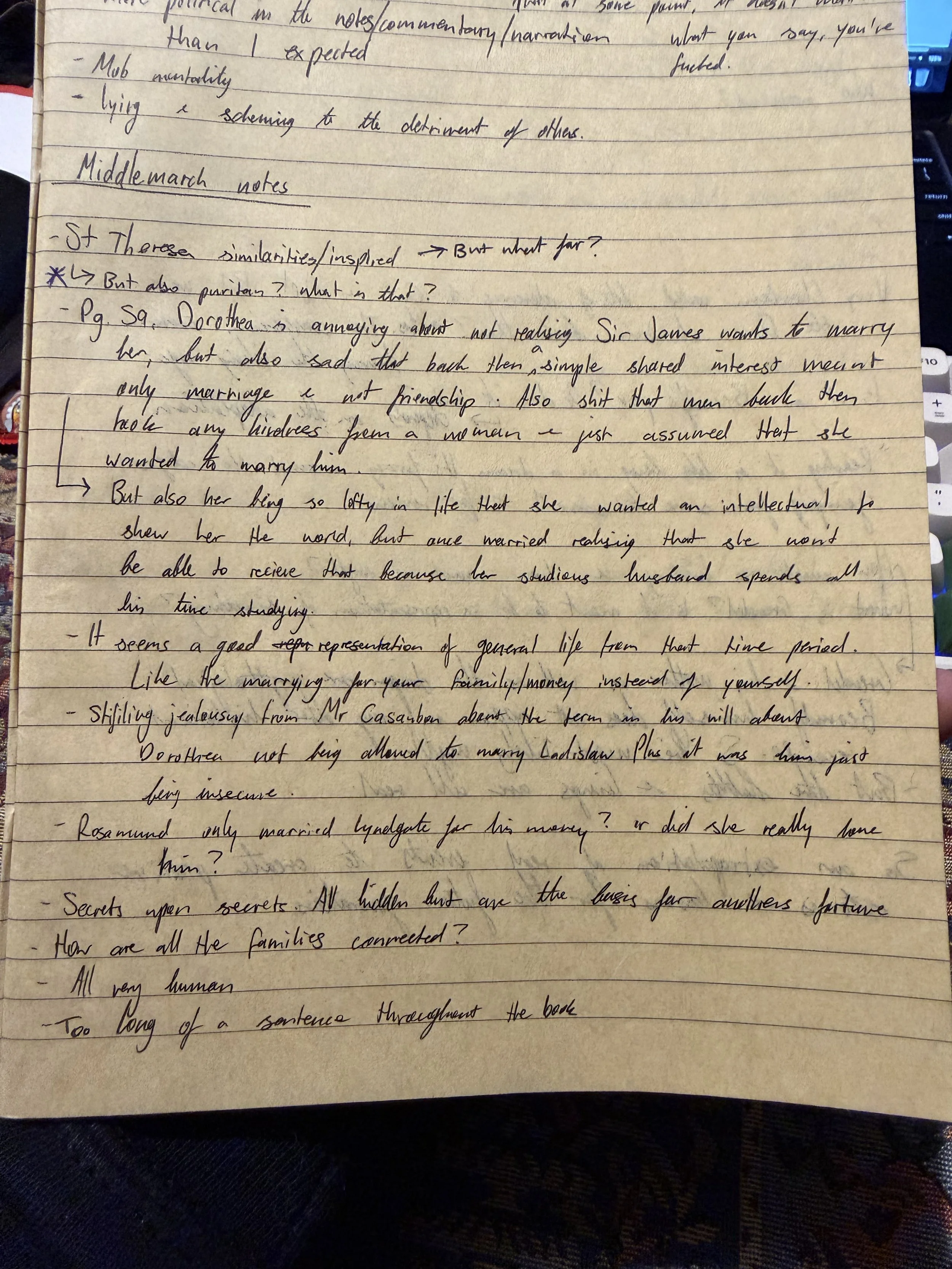
Ok onto the first. I decided to read Middlemarch by George Eliot first, mainly because it was the largest novel I had on my list. I’ll admit that I didn’t know too much about the book going into it, other than the blurb on the back and that it was considered a classic. I’d also like to preface going into this book that I hadn’t read many classics, so I was aware that the language would be different both in terms of words and sentence structure. I have to admit; I really enjoyed it. There were parts of the book that I didn’t agree with the characters decision, thought them silly and short minded, or simply bitchy and annoying. But as I would read and new aspects of the situation were revealed, my thoughts would change and hit a “ahhhh ok yeah that makes sense” thought (bar one character). But it was all so incredibly human, an insight to what life was like in the 1820’s and what was expected of you in terms of gender and class standings. I got so sucked in to all of the different storylines that were happening, you end up feeling for all of them whether it’s pity and sadness or happiness. I will say though, I didn’t like how much the story jumped around to the different POV’s and storylines seemingly in a random fashion. I also didn’t fully understand the book in some sentences and paragraphs with the format of information. The language used was sometimes very suggestive to a scandal but would give no context to the scandal and I was left guessing what the hell she meant. But I’m not saying it’s a writing issue at all, but simply a difference in eras and modernity. I’m sure when I immerse myself into more classics and get used to the language structure and all the different and hidden meanings of things that I would enjoy and understand a reread much more.
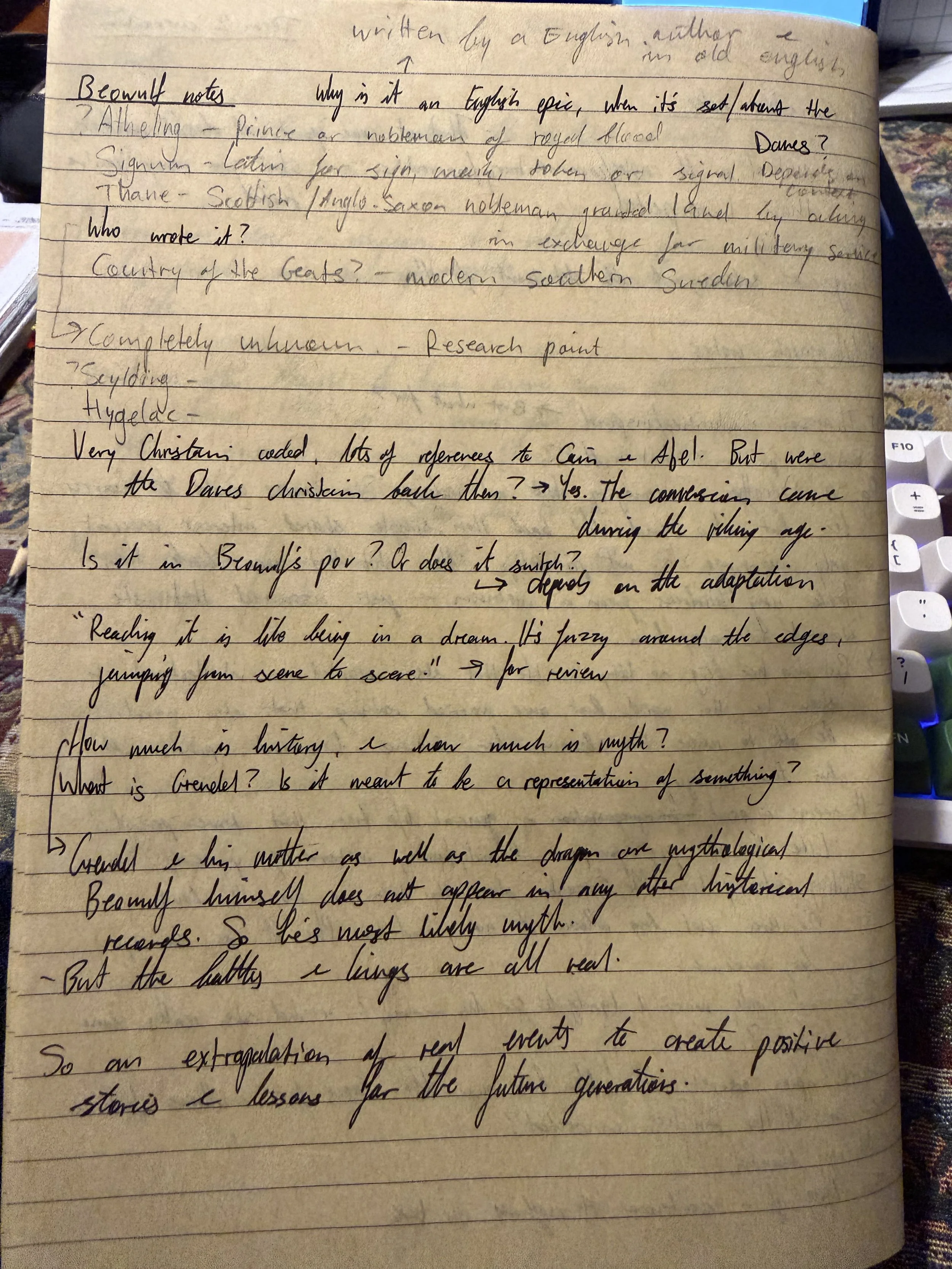
My next read was Beowulf. Now Beowuld I knew would be similar in language to Middlemarch, except from a much earlier version of English. So, I had to pay much more attention to the structure of sentences and what meanings are hidden behind thew words. That aside, it was my first epic and I did enjoy it. The story was gripping and I was invested at what was going to happen next. However, I didn’t enjoy and was pulled out of the story at how much it jumped from scene to scene. Now I know that this is most likely because Beowulf is a poem and not a novel or novella, but those are just my thoughts upon my first reading. It’s definitely something that I would need to reread, maybe even more than once and with different translations, for me to fully understand and grasp the concept. But I do want to take that step to study it further, maybe even found out who wrote it (I’m kidding that would never be me but wow what a thought).
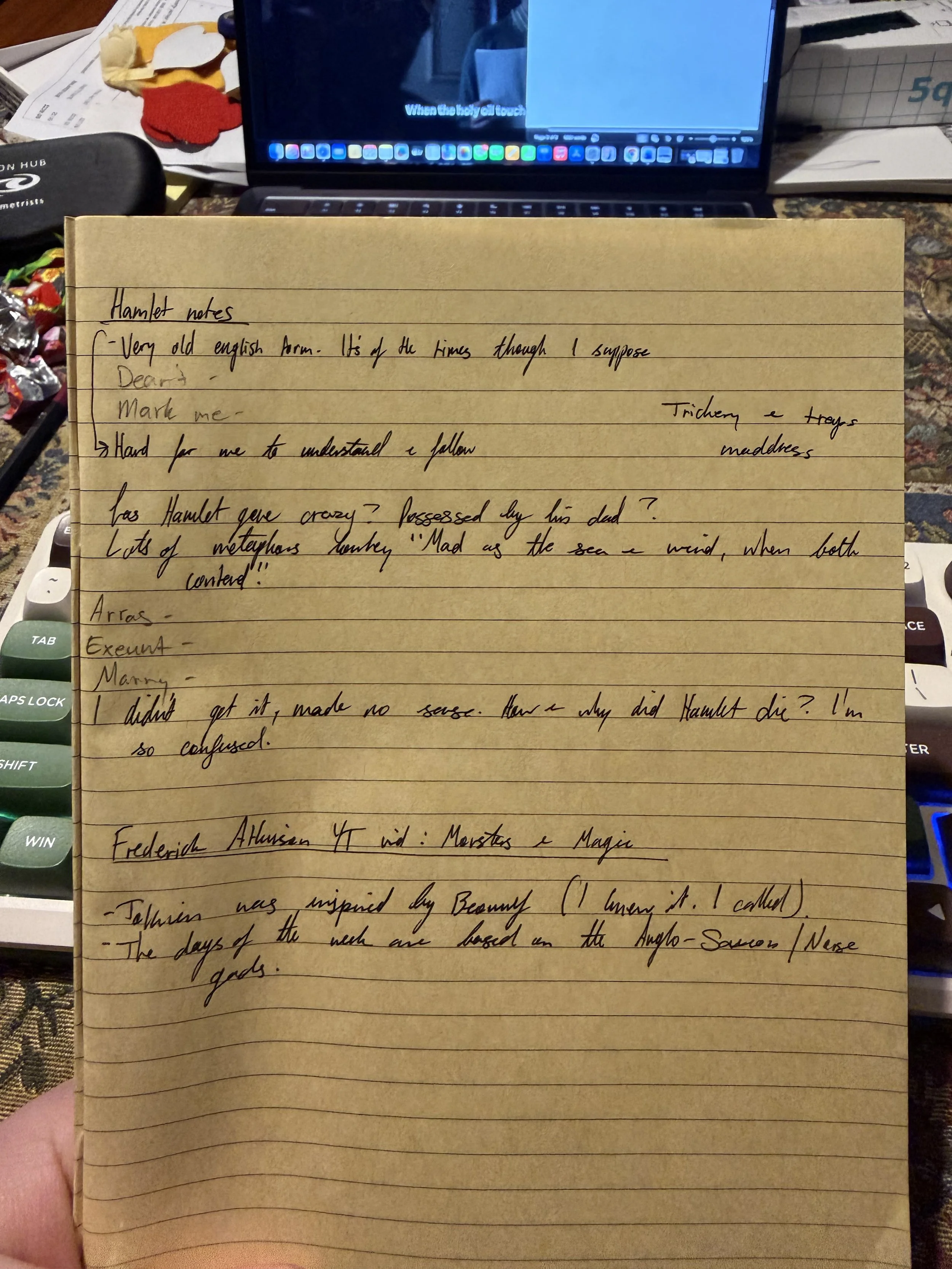
For my final book on the reading list; Hamlet. Book? Play, sorry. Now unfortunately I enjoyed this one least out of my 3 required readings for May. For none other reason than the language, I think. Was I invested in the story? Yes. Did I fully understand what was happening at all times? Not so much. But again, it’s not a criticism of the writing but rather my lack of understanding of all old English/Shakespearean English. But I did have a chuckle or two, and I was actively interested in where the story was heading at all points.
Onwards we march! History. Now for this topic I didn’t want to overload myself with too much so I assigned myself to look into the Cult of Mithras. This cult has been a little bit of a hyper fixation for me since I lightly learnt about them in a classics class a few years ago on my exchange in the UK. I use hyper fixation loosely here; it’s just been on my mind as a research point all these years. So, I wanted top finally sit down and properly look into the cult. You can read my essay on the cult if you’d like, but here’s a quick summary. The Cult of Mithras was a male only religious group that met in underground caves/rooms called mithraea, and worshipped the god Mithras. The religion has its roots in the Persia and Zoroastrian traditions. Now we don’t know what exactly happened in their sessions of worship, but it is to be believed that there were 7 levels to the order and that initiates periodically worked their way up the grades to the top. There is some contention with that though, some believe that anyone could be initiated into the cult and that the 7 levels were different levels of priesthood. Either way, the cult is shrouded in mystery and I love it!
Unfortunately, there’s not much I can say about the Italian portion of topics. I did more of my second-hand grammar book this month and just followed through to lesson 5 of the book. I bought this one after I bought my big drill book, hence why I’m not too far into it. But I’m finding it quite easy to follow without any teacher or CD, so if you can manage to find one at a second-hand book store like I did then I’d recommend picking it up.